Businesses that manufacture, import, or sell products in India are increasingly responsible not only for bringing products into the market but also for managing the waste associated with them.
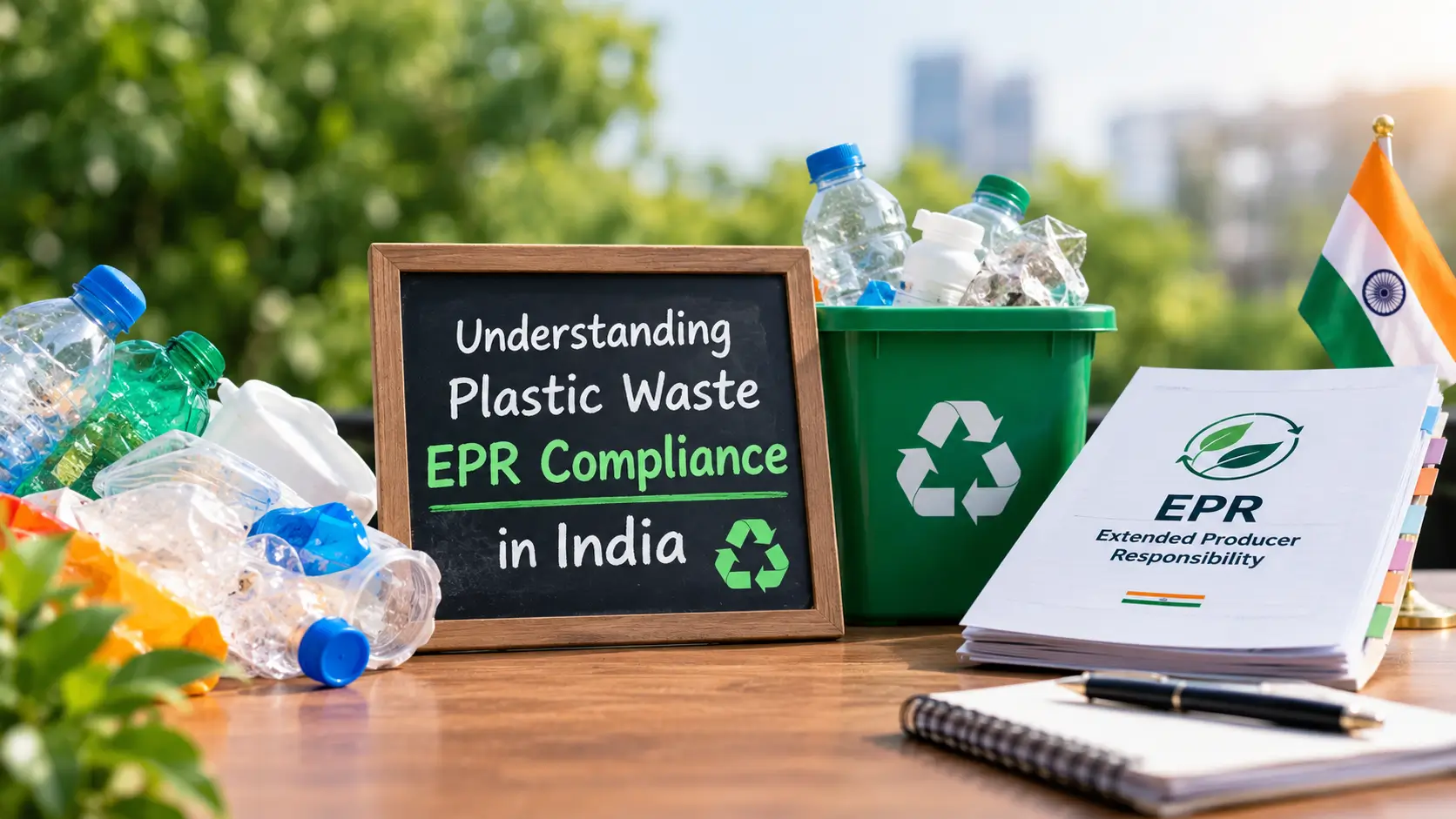
This responsibility is known as Extended Producer Responsibility (EPR).
EPR shifts part of the responsibility for waste management towards producers and other businesses covered under specific waste-management regulations. Depending on the type of product or material involved, businesses may have requirements relating to registration, collection or recycling targets, authorised recyclers, EPR certificates, record keeping, and periodic reporting.
In India, EPR frameworks currently cover areas such as plastic packaging, electrical and electronic equipment, batteries, and waste tyres, with requirements varying according to the applicable rules and the role of the business.
This guide explains what EPR means, who it applies to, how EPR compliance works, and what businesses should consider when managing their obligations.
What Is Extended Producer Responsibility?
Extended Producer Responsibility, or EPR, is an environmental policy approach that places responsibility on producers for managing the environmental impact of products or materials they introduce into the market.
The idea is simple: businesses that place certain products or materials in the market should have a role in ensuring that the resulting waste is properly collected, recycled, recovered, or managed according to the applicable regulatory framework.
However, EPR is not exactly the same for every industry.
The obligations depend on:
- The type of product or waste
- The business’s role
- Quantity manufactured or imported
- Applicable regulations
- Recycling or processing targets
- Applicable reporting requirements
- The relevant CPCB or regulatory portal
For example, the EPR framework for e-waste operates under the E-Waste (Management) Rules, 2022, while waste tyre EPR is governed through the applicable provisions of the Hazardous and Other Wastes framework. Battery waste is covered under the Battery Waste Management Rules, 2022.
Why Was EPR Introduced in India?
India generates significant quantities of plastic, electronic, battery, and other forms of waste as consumption and manufacturing continue to grow.
Traditional waste-management systems cannot address the entire lifecycle of these products on their own.
EPR creates a more structured approach by connecting businesses that introduce products into the market with the systems responsible for collection, recycling, recovery, and reporting.
The broader objectives of EPR include:
- Increasing recycling and responsible waste processing
- Improving traceability of waste management
- Encouraging responsible product and packaging decisions
- Creating accountability among producers
- Supporting formal recycling systems
- Reducing improper disposal of regulated waste
- Improving data and reporting around waste generation and recycling
For businesses, this means environmental compliance is no longer limited to simply managing waste generated inside their own premises.
Who Needs to Follow EPR in India?
EPR requirements generally apply to businesses that fall within the definitions and categories specified under the relevant waste-management rules.
Depending on the EPR framework, this can include manufacturers, producers, importers, brand owners, and other defined stakeholders.
Producers
A producer may be a business that manufactures applicable products or materials and introduces them into the Indian market.
The exact definition depends on the relevant regulations.
Importers
Businesses importing covered products, equipment, batteries, tyres, or packaging may have EPR responsibilities depending on the applicable framework.
Importing a product can therefore create environmental compliance obligations beyond customs and commercial requirements.
Brand Owners
Businesses selling products under their own brand may also fall within EPR requirements even where the actual product or packaging is manufactured by another entity.
For example, EPR rules for e-waste specifically include businesses offering certain electrical and electronic equipment under their own brand or selling imported equipment.
The important point is that EPR applicability should be assessed based on the specific business activity and applicable rules rather than assumed solely from the company’s industry.
Types of EPR in India
EPR is not one single registration or compliance system. Different categories of waste are governed through separate regulatory frameworks and systems.
1. Plastic Waste EPR
Plastic Waste EPR applies to businesses covered under the applicable plastic-waste regulations, particularly those involved with specified plastic packaging.
Depending on the business category, obligations can include registration, reporting, fulfilment of applicable EPR obligations, and maintaining supporting records.
Businesses should first determine the type of plastic packaging they place on the market and the category under which they fall.
2. E-Waste EPR
E-waste EPR applies to specified electrical and electronic equipment covered under the E-Waste (Management) Rules, 2022.
The CPCB’s E-Waste EPR system provides for producer registration and EPR obligations, including recycling targets and online fulfilment through registered recyclers. Producers are also required to submit applicable returns through the portal.
Businesses involved in manufacturing, importing, or selling covered electronic equipment under their own brands should assess whether they fall within the applicable producer definition.
3. Battery Waste EPR
Battery EPR is governed by the Battery Waste Management Rules, 2022.
The framework applies to batteries across different chemistries, forms, sizes, and uses. Producers introducing batteries into the market have EPR responsibilities, including applicable collection and recycling targets. Registration and compliance activities are managed through the CPCB’s centralised battery EPR system.
This makes battery compliance particularly relevant for businesses dealing with products that contain or are sold with batteries.
4. Waste Tyre EPR
Waste tyre EPR operates under the applicable provisions of the Hazardous and Other Wastes framework.
The CPCB waste tyre portal provides an online system for producers, recyclers, and retreaders. Producers have annual recycling obligations based on applicable manufacturing or import quantities and can fulfil obligations through the prescribed EPR certificate mechanism involving authorised recyclers and retreaders.
Businesses dealing with tyres or importing vehicles fitted with tyres should carefully assess their applicable responsibilities.
How Does EPR Compliance Work?
Although the exact process varies between waste categories, EPR compliance generally involves several connected stages.
1. Determine Applicability
The first step is understanding whether your business falls within the relevant definition under the applicable rules.
This includes reviewing your products, materials, packaging, imports, manufacturing activities, brands, and quantities.
2. Identify the Applicable EPR Category
Once applicability is established, the business needs to determine the relevant category and regulatory framework.
This is important because different waste streams have different portals, targets, documentation requirements, and reporting systems.
3. Complete Registration
Where registration is required, the business must submit the prescribed information and supporting documents through the relevant regulatory system.
For example, CPCB maintains dedicated EPR systems for areas such as e-waste, battery waste, and waste tyres.
4. Understand EPR Targets
Applicable businesses may have collection, recycling, or other EPR obligations calculated according to the relevant regulatory framework.
Accurate sales, manufacturing, import, and product data therefore becomes an important part of compliance.
5. Work With Appropriate Recycling Channels
EPR fulfilment can involve registered or authorised recyclers and other eligible entities depending on the waste category.
The relevant EPR system may provide mechanisms for generating, transferring, or using EPR certificates.
6. Maintain Records and File Returns
Registration alone does not necessarily complete EPR compliance.
Businesses may have continuing reporting obligations, including periodic or annual returns, depending on the applicable framework.
For example, the CPCB e-waste portal requires producers to submit applicable returns, while the waste tyre portal provides annual and quarterly return mechanisms.
What Is EPR Registration?
EPR registration is the formal registration of an eligible business with the relevant regulatory system for its applicable waste category.
During registration, businesses may need to provide information such as:
- Company details
- PAN and GST information
- Business activity
- Manufacturing or import details
- Product information
- Authorised person details
- Relevant supporting documents
The exact requirements vary between EPR categories.
For example, the CPCB battery portal asks producers for company, GST, PAN, business, address, and authorised-person information as part of the registration process.
Businesses should therefore avoid treating EPR registration as a generic application. The information and documentation should be prepared according to the specific EPR framework.
What Are EPR Targets?
An EPR target represents the environmental responsibility that an eligible business is required to fulfil under the applicable rules.
Depending on the waste category, the obligation may be linked to quantities manufactured, imported, or introduced into the market.
For example, CPCB’s e-waste framework provides for recycling targets under the applicable schedules, while the waste tyre framework links producer obligations to applicable manufacturing or import quantities.
This makes accurate business data extremely important.
Incorrect product quantities, incomplete sales information, or inconsistent records can affect the accuracy of compliance calculations and reporting.
What Are EPR Certificates?
EPR certificates are regulatory instruments used within applicable EPR systems to support fulfilment of producer obligations.
The exact mechanism varies by waste category.
For example, the CPCB e-waste system provides for producers to fulfil EPR obligations through online purchase of EPR certificates from registered recyclers. The waste tyre framework also provides for EPR certificates and retreading certificates through authorised recyclers and retreaders.
Businesses should therefore ensure that any certificate procurement or transfer is carried out through the applicable regulatory mechanism and eligible entities.
Role of CPCB and Other Regulatory Authorities
The Central Pollution Control Board (CPCB) plays an important role in implementing and administering several EPR systems in India.
Depending on the waste category, CPCB may be involved in:
- Registration systems
- EPR portals
- Compliance monitoring
- Target management
- Certificate mechanisms
- Reporting systems
- Guidelines and standard procedures
State Pollution Control Boards and Pollution Control Committees can also have relevant responsibilities, particularly in areas involving recyclers, environmental permissions, or state-level regulatory requirements.
The specific authority and compliance process depends on the applicable waste category and rules.
Common EPR Compliance Challenges
Many businesses struggle with EPR not because registration itself is complicated, but because compliance continues after registration.
Some common challenges include:
Understanding Applicability
Businesses may not always be sure whether their products, packaging, imports, or brands fall within an EPR framework.
Maintaining Accurate Data
Manufacturing, sales, import, and product information must be consistent with the information submitted to regulatory systems.
Managing Multiple Waste Categories
A business may have obligations under more than one EPR framework. For example, a company may deal with plastic packaging while also selling products containing batteries or electronic components.
Finding Appropriate Recycling Channels
Businesses need to work through applicable authorised or registered entities and maintain supporting documentation.
Keeping Up With Regulatory Changes
EPR requirements, portal procedures, reporting schedules, and compliance mechanisms can change over time.
Regular monitoring is therefore an important part of maintaining compliance.
How Can Businesses Maintain Ongoing EPR Compliance?
A structured compliance system can make EPR management easier.
Businesses should consider maintaining:
A clear product and packaging inventory
Know what products and materials are being introduced into the market.
Accurate quantity records
Maintain reliable manufacturing, sales, import, and other relevant data.
Updated registration information
Review whether company, product, authorised-person, or business information has changed.
Supporting documentation
Keep invoices, certificates, recycler records, applications, returns, and other relevant documents organised.
A compliance calendar
Track reporting deadlines, renewal requirements, target fulfilment, and other important activities.
Regular regulatory reviews
Monitor changes to applicable rules, guidelines, portals, and compliance procedures.
Frequently Asked Questions
- Is EPR mandatory in India?
EPR obligations are mandatory for businesses that fall within the applicable definitions and requirements of the relevant waste-management regulations. The exact obligation depends on the waste category and business role. - Who needs EPR registration?
Manufacturers, producers, importers, brand owners, and other defined stakeholders may require registration depending on the applicable EPR framework. - Is EPR registration enough for compliance?
No. Registration is generally only one part of the compliance process. Businesses may also have target fulfilment, recycling, certificate, record-keeping, and return-filing obligations. - Can one company have multiple EPR obligations?
Yes. A business can potentially fall under more than one EPR framework depending on the products and materials it introduces into the market. - What happens if EPR obligations are not fulfilled?
Non-compliance can result in regulatory action and other consequences under the applicable rules and environmental compensation mechanisms. The specific consequences depend on the relevant framework and circumstances. CPCB portals currently publish compliance notices and information relating to environmental compensation and return filing. - Does EPR apply only to manufacturers?
Not necessarily. Depending on the applicable rules, importers and businesses selling products under their own brands can also have EPR responsibilities.
Conclusion
Extended Producer Responsibility has become an important part of India’s environmental compliance landscape.
For businesses, EPR should not be viewed simply as a one-time registration requirement. Effective compliance involves understanding applicability, maintaining accurate product and quantity data, completing required registration, fulfilling applicable obligations, working through appropriate recycling channels, maintaining documentation, and completing required reporting.
Because EPR requirements differ between plastic packaging, e-waste, batteries, waste tyres, and other regulated categories, businesses should assess their obligations according to the specific regulatory framework applicable to their activities.
Mrinarya Solutions helps businesses understand and manage EPR requirements through registration support, compliance planning, documentation, annual return filing, EPR credit procurement, and ongoing regulatory support.
If you’re unsure whether EPR applies to your business or which compliance requirements you need to follow, talk to our compliance team to understand the applicable requirements for your business.