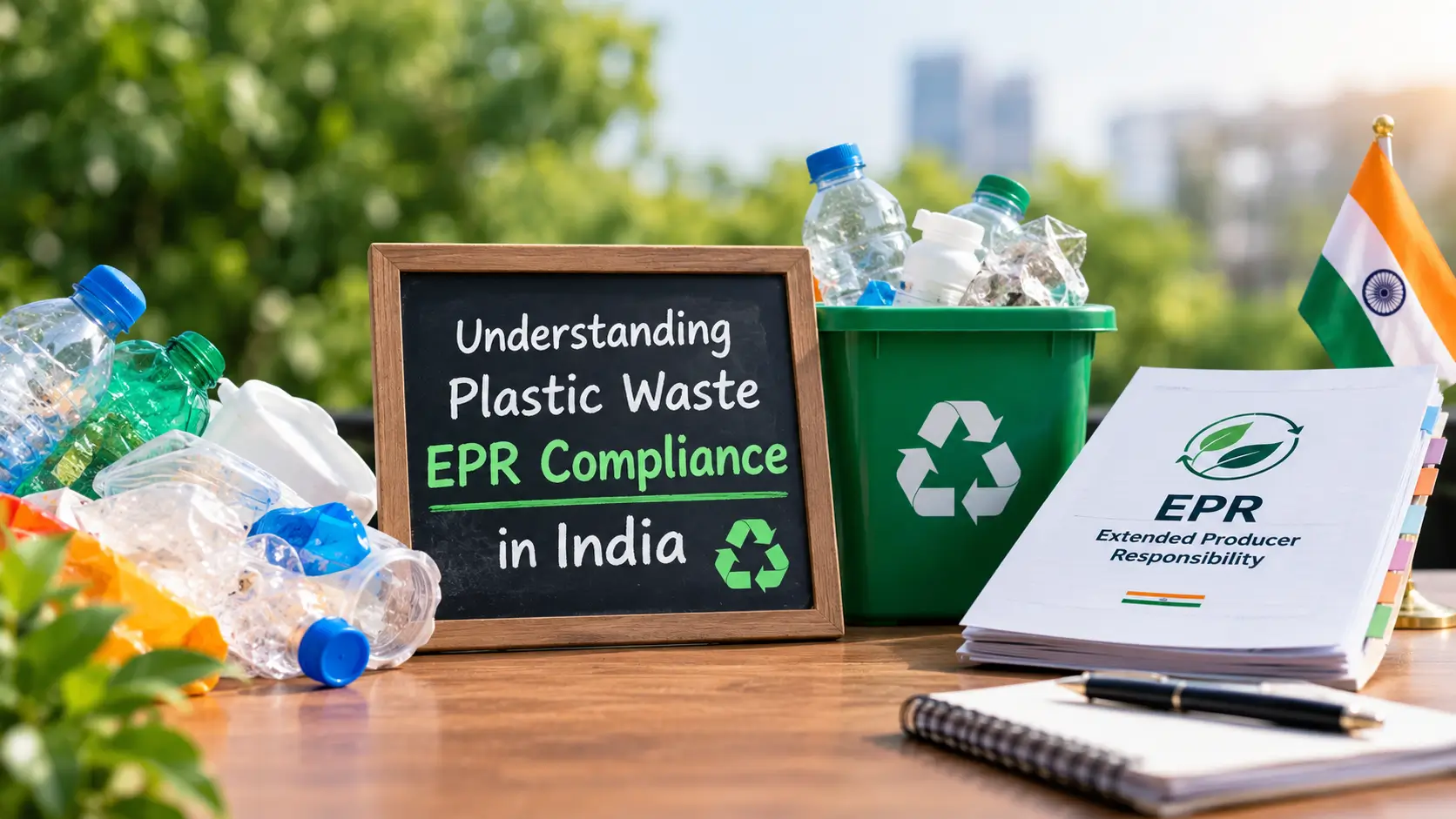
Plastic packaging plays an important role in modern manufacturing, retail, e-commerce, food and beverage, consumer goods, and other industries. At the same time, the increasing volume of plastic waste has created a need for stronger systems to ensure that plastic packaging is collected, processed, recycled, reused, or appropriately managed after use.
This is where Extended Producer Responsibility (EPR) becomes important.
Under India’s Plastic Waste Management framework, specified producers, importers, and brand owners have responsibilities for managing the plastic packaging they introduce into the market. The EPR framework also involves Plastic Waste Processors and regulatory authorities to create a more structured system for plastic waste management.
For businesses, Plastic Waste EPR is not simply a registration requirement. It involves understanding applicability, identifying the relevant plastic packaging categories, calculating obligations, maintaining accurate data, fulfilling applicable targets, managing EPR certificates, and completing required reporting.
What Is Plastic Waste EPR?
Plastic Waste Extended Producer Responsibility is a regulatory framework under which eligible businesses are responsible for ensuring the environmentally sound management of plastic packaging associated with their products.
The Plastic Waste Management Rules, 2016, as amended, provide the regulatory framework for plastic waste management in India. The EPR Guidelines for Plastic Packaging were notified in February 2022 and incorporated into the Rules through Schedule II.
The framework is designed to improve accountability, traceability, and transparency in the management of plastic packaging waste.
What Does EPR Responsibility Mean?
For an eligible business, EPR responsibility can involve:
- Registration with the applicable regulatory system
- Providing information about plastic packaging
- Maintaining production, import, and sales data
- Meeting applicable EPR obligations
- Ensuring plastic waste is processed through eligible Plastic Waste Processors
- Managing applicable EPR certificates
- Filing required returns
- Maintaining supporting records and documentation
The exact requirements depend on the business category, packaging type, quantities, and applicable regulatory provisions.
Who Needs to Follow Plastic Waste EPR?
Plastic Waste EPR can apply to different types of businesses involved in placing plastic packaging in the Indian market.
The framework specifically covers Producers, Importers, and Brand Owners (PIBOs), along with other stakeholder categories covered under the Plastic Waste Management Rules and EPR Guidelines.
Producers
A producer may be a business involved in manufacturing products or packaging covered by the applicable plastic waste framework.
Businesses should assess whether the plastic packaging they manufacture or use falls within the applicable EPR requirements.
Importers
Importers bringing applicable products or plastic packaging into India may have EPR obligations.
This can be particularly relevant for businesses importing packaged consumer products, raw materials, or other goods covered under the applicable regulations.
Brand Owners
Brand owners can also have EPR responsibilities when products are marketed or sold under their own brand and involve applicable plastic packaging.
This means a company does not necessarily need to manufacture the packaging itself to have EPR responsibilities.
What Is Plastic Packaging Under EPR?
Plastic Waste EPR focuses on plastic packaging covered by the applicable regulatory framework.
The EPR system classifies plastic packaging into different categories, and understanding the correct category is important for determining the applicable obligations.
Category I: Rigid Plastic Packaging
This category generally covers rigid plastic packaging used for products placed in the market.
Examples can include plastic containers, bottles, jars, and similar rigid packaging formats, depending on the applicable classification.
Category II: Flexible Plastic Packaging
Flexible plastic packaging includes packaging formats such as plastic films, wrappers, pouches, and similar flexible structures covered by the applicable EPR classification.
Category III: Multilayered Plastic Packaging
This category covers multilayered plastic packaging where plastic is combined with one or more layers or materials as defined under the applicable framework.
Category IV: Plastic Sheets and Similar Items
Certain plastic sheets and other packaging-related plastic materials fall under the applicable fourth category.
The exact classification should be determined based on the material, packaging structure, product application, and applicable regulatory definitions rather than based only on the appearance of the packaging.
Why Is Plastic Waste EPR Important?
Plastic EPR creates a framework through which businesses participate in the management of plastic waste generated from products or packaging they introduce into the market.
Improving Plastic Waste Management
EPR supports systems for collection, recycling, recovery, and appropriate end-of-life management of plastic packaging.
Increasing Accountability
Businesses placing covered plastic packaging in the market are expected to take responsibility for applicable EPR obligations.
Supporting Recycling
The system connects PIBOs with registered Plastic Waste Processors that process plastic waste through permitted methods.
Improving Traceability
The CPCB’s EPR system is designed to improve accountability, traceability, and transparency in the fulfilment of EPR obligations.
How Does Plastic Waste EPR Compliance Work?
Plastic Waste EPR compliance involves several stages rather than a single registration activity.
Step 1: Determine EPR Applicability
The first step is to determine whether the business falls within an applicable stakeholder category.
This requires reviewing the company’s manufacturing, importing, branding, products, packaging, and business activities.
Step 2: Identify Plastic Packaging Categories
The business should identify the types and quantities of plastic packaging it introduces into the market.
Correct categorisation is important because EPR obligations are linked to the applicable packaging categories and quantities.
Step 3: Collect and Validate Business Data
Businesses should maintain accurate information relating to:
- Plastic packaging quantities
- Production
- Imports
- Sales
- Packaging categories
- Product information
- Applicable financial-year data
Accurate data helps reduce discrepancies during registration, target calculation, reporting, and audits.
Step 4: Complete EPR Registration
Eligible entities need to register through the applicable EPR system.
CPCB’s framework provides for registration of PIBOs and Plastic Waste Processors through the EPR system.
Step 5: Fulfil Applicable EPR Obligations
Registered businesses need to fulfil their applicable EPR obligations through the mechanisms prescribed under the framework.
This may involve ensuring that plastic waste is processed through eligible Plastic Waste Processors and managing applicable EPR certificates.
Step 6: Complete Reporting and Annual Returns
Businesses must maintain appropriate records and submit applicable returns within the prescribed regulatory framework.
The CPCB plastic EPR system includes provisions for annual returns and regulatory monitoring.
What Is the CPCB Plastic EPR Portal?
The CPCB developed an online EPR system to facilitate registration, compliance management, certificate transactions, and reporting for stakeholders under the Plastic Waste Management framework.
The original Plastic Packaging EPR portal was used for registration of PIBOs and Plastic Waste Processors and for EPR certificate-related activities.
Important Portal Change in 2026
The existing Plastic EPR portal was discontinued from 28 June 2026, following the launch of the Common EPR Portal.
CPCB has stated that data from registered units was migrated to the new Common EPR Portal and users are required to verify their migrated information. Existing users are instructed to register on the Common EPR Portal using the same Authorized Person PAN and Company PAN associated with their earlier account.
This change makes it particularly important for existing registered businesses to verify their account and business information after migration.
What Are Plastic Waste Processors?
Plastic Waste Processors, commonly referred to as PWPs, are entities involved in processing plastic waste through activities permitted under the applicable framework.
Depending on the applicable category, processing activities can include recycling, waste-to-energy, waste-to-oil, co-processing, and industrial composting.
Why Are Registered PWPs Important?
EPR obligations should be fulfilled through the mechanisms and eligible entities recognised under the applicable framework.
CPCB has stated that only registered Plastic Waste Processors can provide certificates that are considered for fulfilment of EPR obligations by Producers, Importers, and Brand Owners.
Businesses should therefore verify the registration and eligibility of the processor before relying on its certificates for compliance.
What Are EPR Certificates?
EPR certificates are generated through the applicable regulatory system by eligible Plastic Waste Processors and can be used within the prescribed mechanism for fulfilment of EPR obligations.
CPCB has established provisions for generation and transfer of EPR certificates through the plastic EPR system.
Why Do EPR Certificates Matter?
Certificates provide a documented mechanism for demonstrating fulfilment of applicable EPR obligations through eligible plastic waste processing.
Businesses should ensure that certificates are generated and transferred through the applicable regulatory process and are supported by appropriate records.
What Information Is Required for Plastic EPR Registration?
The exact information and documents depend on the applicant category.
The CPCB guidance for PIBO registration includes information such as:
- Legal name
- Trade name
- Business type
- Company type
- Registered address
- PAN
- CIN, where applicable
- Authorised person’s name and designation
- Authorised person’s mobile number
- Authorised person’s PAN
Additional business and packaging information may be required during the application and compliance process.
Why Accurate Registration Data Matters
Incorrect or inconsistent information can create issues during compliance activities.
Businesses should ensure that company details, PAN, GST information, authorised-person information, packaging data, and other submitted records remain accurate and updated.
What Are Plastic EPR Targets?
EPR targets represent the obligations that an eligible business needs to fulfil under the applicable Plastic Waste Management framework.
These obligations are connected to the quantity and type of plastic packaging introduced into the market and the applicable regulatory requirements.
Why Packaging Data Is Important
A business cannot accurately manage its EPR obligation without reliable packaging data.
Important information may include:
- Type of packaging
- Packaging category
- Quantity placed on the market
- Production data
- Import data
- Sales information
- Historical compliance data
Businesses should maintain these records systematically rather than preparing them only when an annual return is due.
What Is Annual Return Filing Under Plastic EPR?
Annual return filing is an important part of ongoing Plastic Waste EPR compliance.
Registered stakeholders may need to submit information relating to their activities, plastic packaging, EPR obligations, and fulfilment through the applicable regulatory system.
CPCB has issued directions and notices relating to annual return filing by PIBOs and Plastic Waste Processors, including notices for financial years 2024–25 and earlier periods.
What Should Businesses Maintain?
Businesses should maintain supporting records such as:
- Production records
- Import records
- Sales information
- Packaging data
- EPR certificates
- Processor details
- Invoices and transaction records
- Previous return information
- Registration details
Maintaining these records throughout the year makes annual compliance easier and reduces last-minute data gaps.
Common Plastic EPR Compliance Challenges
Plastic EPR compliance can become difficult when businesses treat it as a one-time registration process.
Incorrect Packaging Classification
Misclassifying plastic packaging can affect the calculation and reporting of obligations.
Incomplete Business Data
Missing production, import, sales, or packaging information can result in inaccurate submissions.
Registration Information Gaps
Differences between GST, PAN, company, authorised-person, and portal information can create verification issues.
EPR Certificate Management
Businesses need to ensure that certificates are obtained through eligible and registered Plastic Waste Processors and are properly reflected in the applicable system.
Delayed Annual Returns
Missing reporting deadlines can result in compliance issues and regulatory action.
Changes in Regulatory Requirements
The Plastic Waste Management framework continues to evolve through amendments, directions, portal updates, and implementation instructions.
Businesses should therefore monitor regulatory updates rather than relying indefinitely on an old compliance process.
What Happens in Case of Non-Compliance?
Non-compliance with applicable Plastic Waste Management requirements can lead to regulatory action.
CPCB has issued show-cause notices and directions relating to non-fulfilment of EPR targets and non-submission of annual returns.
Environmental compensation mechanisms may also apply in cases of violation, subject to the applicable rules and regulatory guidelines.
Why Businesses Should Address Compliance Gaps Early
Identifying gaps before a reporting deadline gives businesses more time to:
- Correct inaccurate data
- Update registration information
- Address shortfalls
- Organise supporting documents
- Review EPR certificates
- Complete pending filings
How Can Businesses Maintain Plastic EPR Compliance?
A practical compliance system can make ongoing EPR management more organised.
Maintain Packaging Data Throughout the Year
Do not wait until annual return filing to collect packaging information.
Track Regulatory Changes
Monitor CPCB notifications, portal updates, amendments, and implementation directions.
Review EPR Targets Regularly
Businesses should monitor their applicable obligations and fulfilment status rather than waiting until the end of the financial year.
Work With Eligible Processors
Where EPR certificates or waste processing are required, ensure that the relevant Plastic Waste Processor is registered and eligible under the applicable framework.
Keep Documentation Organised
Maintain registration documents, invoices, packaging data, certificates, returns, and correspondence in a structured compliance record.
Conclusion
Plastic Waste EPR has become an important part of environmental compliance for businesses that manufacture, import, or market products involving regulated plastic packaging.
Effective compliance requires more than obtaining a registration number. Businesses need to understand their applicability, classify packaging correctly, maintain accurate data, monitor EPR obligations, work with eligible Plastic Waste Processors, manage EPR certificates, and complete required reporting.
The transition to the Common EPR Portal in 2026 also makes it important for existing registered businesses to verify their migrated information and ensure that their compliance records remain accurate.
Mrinarya Solutions supports businesses with Plastic Waste EPR registration, compliance assessment, EPR target planning, documentation, annual return filing, EPR certificate management, and ongoing regulatory support.
Need help understanding your Plastic Waste EPR requirements? Contact Mrinarya Solutions to discuss your business and compliance needs.